
Nothing in Basket!
From Empty Garden to Wildlife Haven: My Journey
Like most people, I didn't notice the lack of birds in my garden until I saw a wildlife program about the decline in British wildlife. After years of working long hours, I had forgotten the joy of bird watching from my childhood. When I finally quit the rat race and moved to Suffolk, I had a garden; small, barren, and empty of life. My first attempt at attracting birds with feeders fell flat on its face.
I began my journey by observing the nature reserves backing onto my new Suffolk home. I realised the secret wasn't just food; it was shelter, safety, and natural food sources. I read books, took long walks in the forest, and started experimenting with plants and seeds, aiming to bridge the gap between my grandmother's wild garden and my mother's cultivated one.
If I can transform a barren patch into a garden alive with Goldfinches, Blackbirds, and Woodpeckers, you can too!
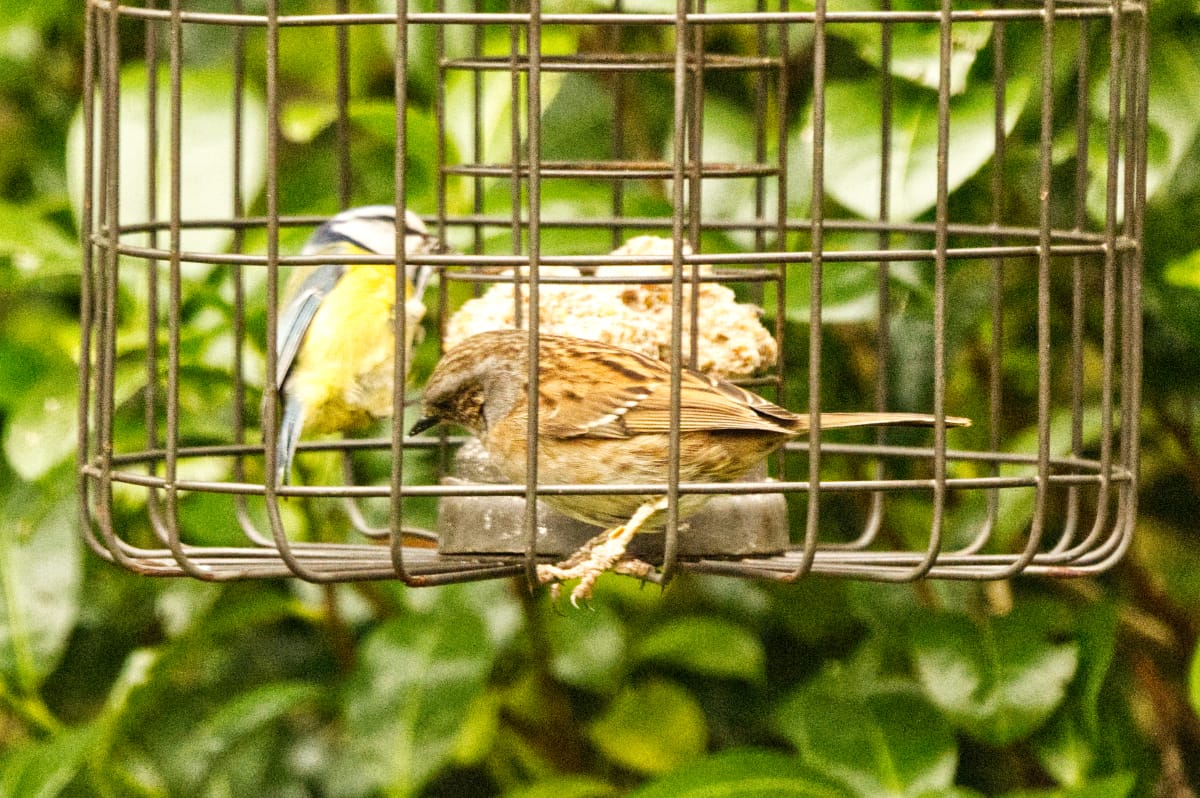
A Dunnock and Blue Tit visiting a caged bird feeder next to a small tree in my garden
1. The Single Most Important Secret: Plants & Shelter
Birds need three things: somewhere high to perch, somewhere dense to hide, and natural food.
- Hiding and Safety: Birds didn't come to my town garden until the shrubs offered enough cover. In my Suffolk garden, I strategically planted large and small evergreen bushes and fruit trees near the feeding stations. These act as essential corridors, allowing birds to move safely between your garden and the wider environment.
- Some birds are shy, but all need somewhere they can quickly hide from predators like cats and birds of prey. Feeders should always be positioned closest to trees and bushes.
- The Power of Natural Food: Providing the right plants that produce seeds, berries, and harbour insects is ideal. I have a hornet crab apple tree the blackbirds devour and Blackcaps adore the berries in my mature ivy.
- Native & Cultivated Mix: You can go down the native tree route (Field Maple, Hawthorn), but cultivated plants like 'cherry' laurels, privet, and pyracantha also provide excellent flowers, berries, and essential cover.
- Christina's Observation: Before you remove any plant (even ivy or cherry laurel), observe it for an entire year. You could be destroying an entire ecosystem that birds and insects rely on.
- Growing Bird Food: We rely on specific cultivated and wild seeds to feed different species:
- Giant Sunflowers produce huge seed heads for larger birds like woodpeckers and finches. Giant Sunflowers
- Dwarf Sunflowers bring in smaller, shyer birds. cornflower
- Feeder Essentials: I learned the hard way: it's not just what you offer, but how. Sticking to high-quality sunflower hearts, peanuts, mealworms, and fat balls drastically reduces waste and discourages rodents.
- The Squirrel Solution: I've found that a large baffler, correctly positioned and moved up an inch or two until the squirrels can no longer jump over it, is the best defence. The feeder that relies on the squirrels weight to cover the feeding holds, only works if it's not near anything the squirrel can brace it's back legs on to, because it will learn to hold the feeder up and not to put it's weight onto it.
- Water Sources: Birds don't care how fancy the bath is! We use traditional bird baths, large plant trays, small dishes, and even old plastic meat/fruit trays under bushes. Robins and dunnocks particularly love the shallow options.
- Essential Hygiene: Birds pass on nasty diseases quickly. You could be killing the birds with kindness if you don't clean often.
- Keep the water clean and defrost it in winter.
- Give everything (feeders, tables, and baths) a good scrub with hot soapy water, or diluted bleach followed by a rinse
- Move feeders to different spots regularly to allow the ground to recover from footfall, poop, and dropped seed.
- Tidying Less: To increase bugs, you need to change the way you garden. Leave the leaves where they fall, allow some long grass, and pile logs in a corner. What I've found is the birds and worms tidy the garden up for you; just not as fast as you can do it!
- Weed Wisdom: Embrace weeds in your lawn; they are food for many insects. Avoid man-made chemicals completely.
- Breeding and Shelter: Mature hedges (native or non-native), brambles, and ivy make great nesting sites. Don't prune hedges between March and July to avoid disturbing nests.
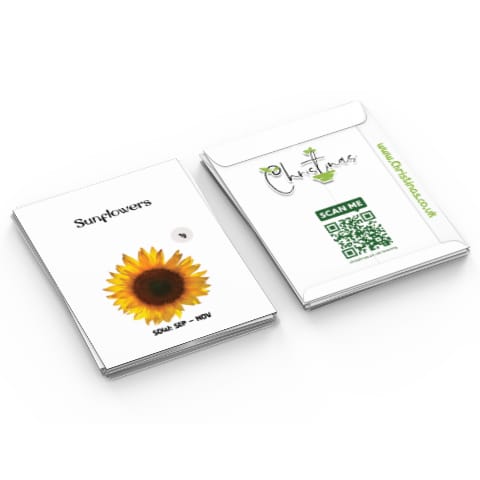
You can purchase dwarf and giant sunflowers from my online shop.
2. Seeds & Supplements: Turning Flowers into Feeders
While feeders are great, the highest quality food will always be the seeds you grow yourself.
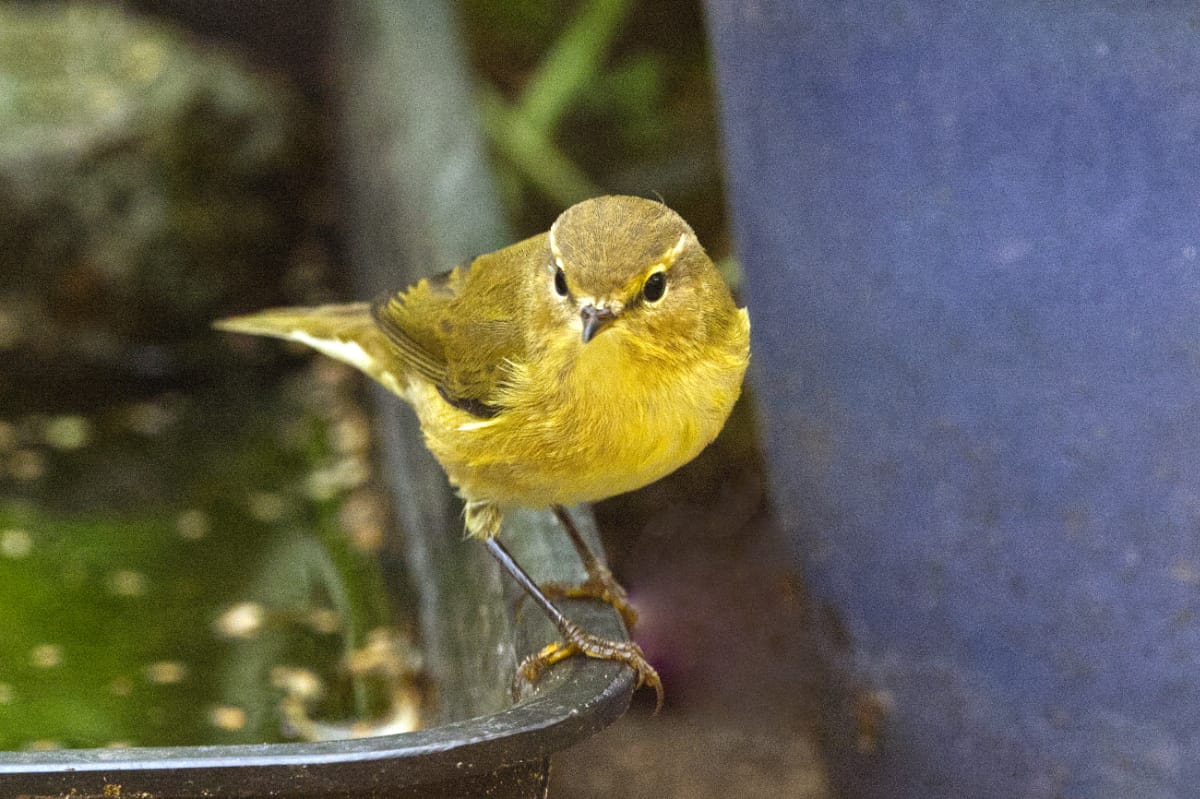
Here is a Chiff Chaff using my plant tray as it had water in it. The Chiff Chaff also enjoys the small pond and bird bath.
3. Water and Cleanliness (The Bird Spa)
After eating dry seeds, birds desperately need water to drink and bathe in, which keeps their feathers waterproof and insulating.
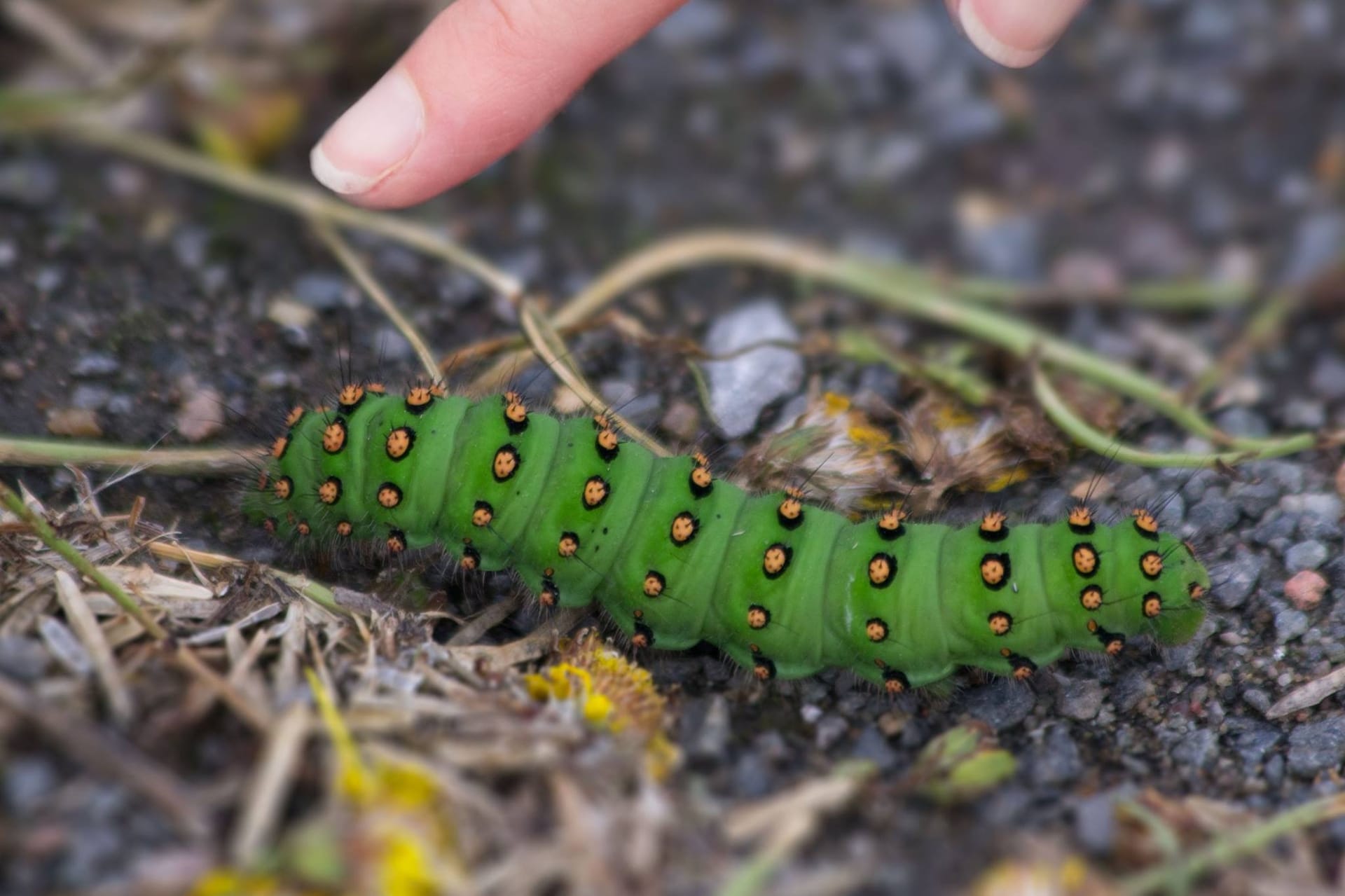
This is my finger next to an Emperor Moth caterpillar
4. Insect-Friendly Gardening
Wrens and most parent birds feed insects to their young. If you don't have insects and caterpillars, you won't keep the birds for long.
Conclusion: My Simply theory
My Grandmother had a wild garden, my mother had a traditional one. I decided to go in the middle: test out a theory, see what happens, and repeat.
The more you watch and interact with the wildlife in your garden, the more you realise just how smart they all are, and that they don't mind being near you if they feel safe.
Try things out for yourself and have fun while you do it!
About the Author & Content Disclaimer
The advice in this post is based on 10+ years of hands-on experience testing seeds in our sandy Suffolk Garden.
While I love sharing my journey and the things I discover, please understand that I am not a certified professional in gardening or wildlife. I ground my content by deep-diving into reliable books and expert resources, but please use my advice only as a guide for your specific garden.
I use and sell the same UK-sourced, wildlife-approved seeds in my own garden that you see throughout this site. Find my proven seed varieties here.
If you notice any inaccuracies or have additional insights to share, please feel free to contact me via this website's contact forms.