
Nothing in Basket!
The Ultimate Guide to Attracting & Supporting UK Butterflies (Nectar, Larval Food, & Habitat)
Creating a Butterfly Haven: The Basics
Butterflies are a delightful addition to any garden, but due to factors like climate change, pesticide use, and habitat loss, many populations are declining. The cornerstone of a butterfly-friendly garden is providing what they need to complete their full life cycle: Nectar for adults and specific food plants for caterpillars (larvae).
By catering to butterflies, you also support moths, including the hummingbird, bee hawk, and mint moths, which feed during the late afternoon and night.
Sunshine and Shelter
Butterflies are cold-blooded and need warmth. They thrive in sunny, sheltered locations. Plant nectar-rich flowers in such spots, perhaps in front of a hedge, for optimal benefit.
- Basking Spots: Butterflies need to spread their wings and bask in the sun to raise their body temperature for flight. Provide large-leaved plants, rocks, stepping stones, or bare soil patches for ideal basking spots.
A Natural Approach: Avoid Chemicals
Insecticides, particularly those used near flowering plants or caterpillar food sources, are detrimental to butterflies and other pollinators. Weedkillers also eliminate crucial food plants for caterpillars. Embracing a natural, pesticide-free environment is essential for their survival.
Nectar Plants: The Butterfly Buffet
Adult butterflies feed on nectar, using their long proboscis to sip from flowers. They prefer both flat, daisy-like blooms and plants with long, tubular flowers. The goal is to provide nectar-rich flowers blooming throughout the entire season, from March to November.
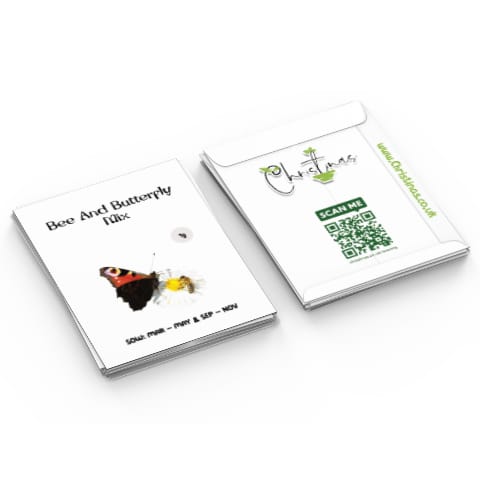
Try my tried and tested Butterfly & Bee wildflower seed mix. It works perfectly on my sandy soil and has certainly increased the amount of bees and butterflies I have visiting my garden. You can buy the seed mix from my online shop - Bee & Butterfly Seed Mix
The Top 10 Nectar Plants
These ten plants are reliable nectar sources and will consistently bring butterflies and moths to your garden:
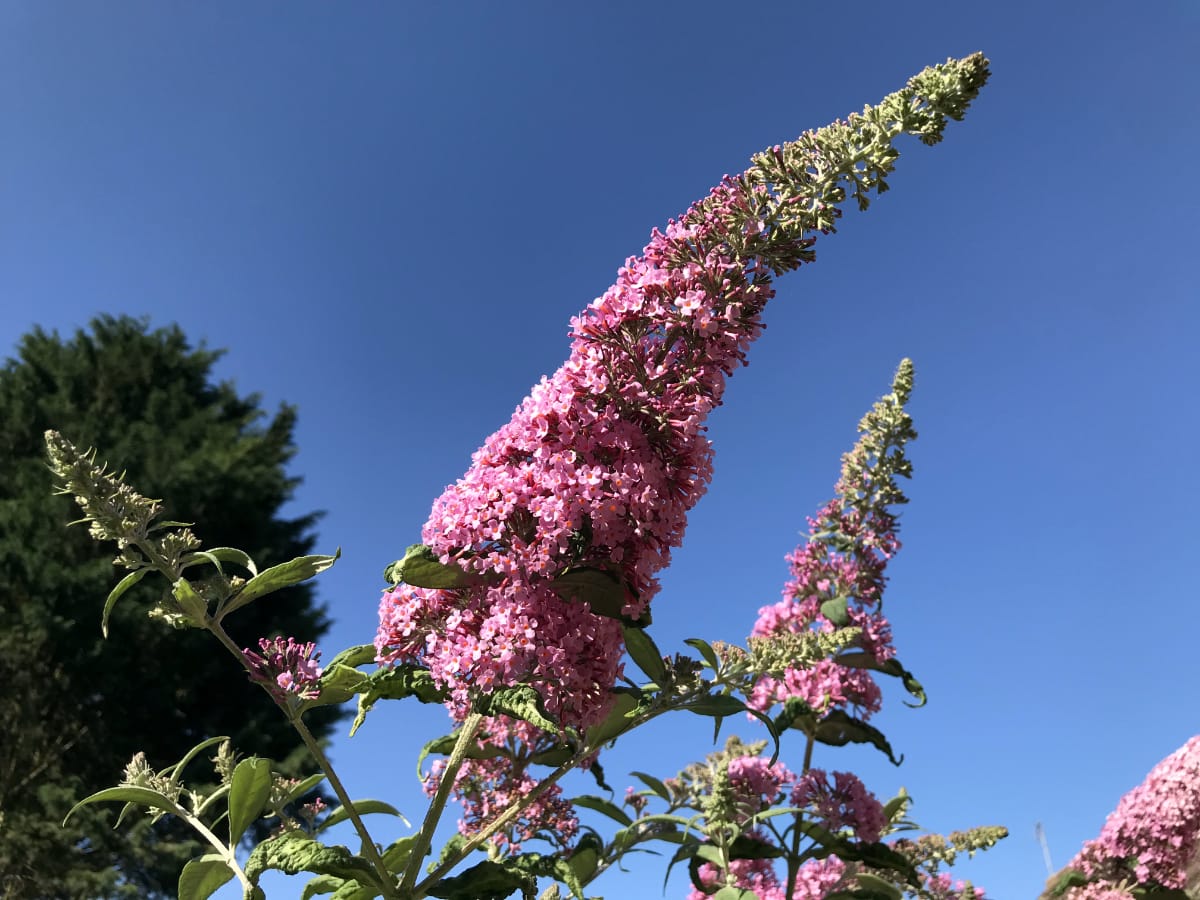
- Buddleja (Buddleja): The best-known nectar flower for adults.
- Red Valerian: Performs best in poorer, dry or chalky soils.
- Verbena bonariensis: Tall, purple flowers on wiry stems, extremely rich in nectar late in the season.
- Sedum (Hylotelephium spectabile): The pink varieties produce the most nectar in autumn.
- Hebe: A reliable evergreen shrub attracting a range of insects, known to flower nearly all year.
- Wild Marjoram (Origanum vulgare): Delicate pink flowers are a treat for butterflies and bees.
- Common Knapweed (Centaurea nigra): A must-have for wildflower areas, attracting Common Blue and Meadow Brown butterflies.
- Heap-agrimony (Eupatorium cannabinum): Attracts Red Admirals and Commas; enjoys damp areas.
- Field Scabious (Knautia arvensis): Packs meadows with colour and is popular with butterflies.
- Erysimum 'Bowles's Mauve': Flowers from spring into autumn, providing early and later nectar. (I often prefer Walberton's Fragrant Sunshine for its yellow flowers and abundant insect visitors.)
Shrubs, Vines, and Seasonal Blooms
Shrubs provide a rich source of nectar as well as shelter for butterflies to over winter.
Spring Flowers (Crucial for emerging species):
- Erysimum 'Bowles's Mauve' (and Walberton's Fragrant Sunshine)
- Aubrieta, Violets, Primroses, Wallflowers, Lilacs, and Sweet Rocker.
Summer Flowers:
- Lavender: A rich source of nectar throughout summer. Plant robust varieties like Lavandula angustifolia.
- Buddleja, Verbena bonariensis, Marjoram, Red Valerian, and Hebe.
- Honeysuckle, Cranesbill, Catmint, Cosmos, Feverfew, and Heliotrope are also favourites.
Autumn Flowers (Valuable energy reserves for over wintering):
- Ivy: The late-season flowers attract late-flying species like Red Admiral.
- Sedum (Hylotelephium spectabile), Michaelmas Daisies, and Heather.
Extending Blooms & Windfall Feasts
- Deadheading: Regularly removing spent flowers encourages continued blooming, translating to more nectar for butterflies.
- Fallen Fruit: Leaving fallen fruit (pear, apple, plum) in autumn provides sustenance for butterflies like the Red Admiral and Painted Lady, who enjoy the sugary juices.
Larval Food: Caterpillar Cuisine
While adults sip nectar, caterpillars have specific dietary needs, feeding on the leaves and buds of certain plants. Incorporating these plants allows butterflies and moths to complete their life cycles in your garden. If you find a caterpillar in your garden, leave it alone so it can grow into a butterfly!
Caterpillars generally eat very little of the food plants they are found on, and they don't leave the plants looking too ragged, as this would attract the attention of their predators. Because they prefer feeding on particular plant species, they help prevent any one plant species from becoming too dominant, which creates a balanced ecosystem. They also serve as prey for other species, such as hedgehogs, birds, and bats, who will keep the caterpillar numbers under control for you.
One of the best ways to encourage caterpillars into your garden is to go a little wild and plant native species that they can feed on.
Top Food Plants Caterpillars Enjoy
- Nettles: Red Admirals, Commas, Peacocks, Small Tortoiseshell butterflies. Also attracts various moths (e.g., Mother of Pearl, Jersey Tiger).
- Grasses: Skippers, Marbled White, Meadow Brown, Gatekeeper, Ringlet, and Speckled Wood butterflies.
- Nasturtiums (Tropaeolum majus): Large White, Small White, and Green-veined White butterflies.
- Bird's foot trefoil (Lotus corniculatus): Common Blue and Green Hairstreak butterflies.
- Hops (Humulus lupulus): Comma butterfly. Also attracts moths (e.g., Currant Pug, Pale Tussock).
- Blackthorn (Prunus spinosa): Brown Hairstreak butterfly. Also attracts moths (e.g., Peppered Moth, Chinese Character).
- Oaks (Native Quercus species): Purple Hairstreak butterfly. Also attracts moths (e.g., Merveille du Jour, Oak Beauty).
- Hawthorn (Crataegus Monogyna): Swallow-tailed Moth, Brimstone Moth, and Feathered Thorn.
- Willows (Salix species): Sallow Kitten, Poplar Hawk-moth, Puss Moth, Herald, and Red Underwing.
- Sweet Bedstraw (Galium species): Hummingbird Hawk-moths, Red Twin-spot Carpet, and Barred Straw moth.
- Comfrey (Symphytum officinale): Scarlet Tiger moth.
- Lime (Tilia species): Orange Sallow and Lime Hawkmoth.
Other Great Food choices
- Alder buckthorn
- Dog rose (Rosa canina)
- Fuchsias
- Holly (Ilex aguifolium)
- Ivy (Hedera helix)
- Thistles (Cirsium and Carduus species)
- Verbascum thapsus and Verbascum bombyciferum
- The Brimstone feeds on common buckthorn and sea buckthorn. The White Admiral caterpillar feeds on Common Honeysuckle (Lonicera periclymenum). Lady's Smock (Cardamine pratensis) is also a host plant.
Deep Dive: The Butterfly Bush (Buddleja davidii)
Buddleja is one of the best nectar shrubs you can plant for butterflies, attracting a wide variety of species, including the Red Admiral, Peacock, and Small Tortoiseshell butterfly. It is a perennial, semi-evergreen plant that will fill your garden with a lovely scent and a vibrant array of colours (white, pink, dark purple, magenta, blue, and mauve).
- Visitors: Buddleja attracts butterflies, moths (including the hummingbird hawk moth), bees, and birds hunting for aphids.
- Sizing and Placement: Buddleja can grow as high as 10 feet an to an equivalent width. It is best situated towards the middle back of a border.
Growing and Controlling Buddleja
Buddleja is a fast-growing, hardy plant that can withstand a variety of conditions. However, many people consider them an invasive species because they produce hundreds of seeds that can spread far and wide, growing in pavements, roadways, and brickwork.
- Pruning is Crucial: To keep them under control and encourage flowering, you must remove the spent flower heads so they don't produce seeds.
- Pruning Timing: Prune once a year, ideally in early spring once there is no chance of frost (usually March in the south, or as late as May in the north).
- My Pruning Approach: I prefer to cut all but one of my bushes back to knee height in spring. This encourages vigorous new growth and an abundance of flowers later in the season. The one I leave tall is only cut for crossing or dead branches, giving me the best of both worlds.
When to Plant & Care
- Planting Time: Plant them in Spring or Autumn to give them enough time to grow and produce a beautiful display of flowers.
- Soil: They like space with loose, well-drained soil. They do not require fertilisers, but adding compost when planting will help root growth.
- Watering: Water well when first planted. Once fully grown, water sparingly or when you notice the leaves looking droopy. Do not over-soak the soil; too much water can kill the plant.
Some Great Dubbleias to Choose From
- Buddleja davidii
- Buddleja x weyeriana
- Buddleja globosa
About the Author & Content Disclaimer
The advice in this post is based on 10+ years of hands-on experience testing seeds in our sandy Suffolk Garden.
While I love sharing my journey and the things I discover, please understand that I am not a certified professional in gardening or wildlife. I ground my content by deep-diving into reliable books and expert resources, but please use my advice only as a guide for your specific garden.
I use and sell the same UK-sourced, wildlife-approved seeds in my own garden that you see throughout this site. Find my proven seed varieties here.
If you notice any inaccuracies or have additional insights to share, please feel free to contact me via this website's contact forms.