



Nothing in Basket!
Chasing the Autumn Bloom: How We Grow Cosmos in Our Suffolk Garden
Back in 2023, I found myself looking for a very specific type of plant. I needed something that would flower late into the season, fill empty gaps in the borders with beautiful, delicate foliage, provide a late source of nectar for our local pollinators, and actually enjoy a hot, sunny garden.
It was pure luck that I caught an episode of Gardeners' World where they did a segment on Cosmos. Intrigued, I went off to read about them and decided to give them a go. I started with a small seed packet from Sarah Raven, alongside a smaller variety that emerged from my existing prairie seed mix.
I was instantly captivated, firstly by the gorgeous, feathery green foliage, and then utterly charmed by the open blooms that drew a constant buzz of happy bumblebees. Needless to say, Cosmos have become an indispensable part of my garden. I'm glad to say they are usually the last blooming flowers left standing as we approach late Autumn.
1. Pots vs. Borders: Surviving the British Summer
Because Cosmos originate from Central and South America, they are natural sun-worshippers. However, growing them in the UK requires a bit of tactical placement, especially depending on the unpredictable summer weather.
Through my own garden trials, I've learned two distinct lessons about how they handle our local conditions:
- In Containers: Cosmos do fantastically well in my pots. The contained environment allows me to closely manage their moisture and soil fertility levels, and they put on a spectacular, bushy show.
- In open soil: They have a much harder time in my soil during an intense summer heat wave. Often growing shorter than those in the pots. However, if it's a normal, milder English summer, they are absolutely brilliant for filling empty, barren spaces directly inside my borders.
Because they perform so well in dry, sunny areas under normal conditions, we even added them to our drought-tolerant prairie mix to give it a late-season pop of colour.
2. Sowing, Deep Planting, and the "Pinching" Trick
You can sow Cosmos seeds directly into the ground in early spring, but I will start some off indoors in small pots or modules filled with free-draining seed compost. Once the risk of frost has entirely subsided in late May, they are ready to be transplanted outside.
Handling Leggy Seedlings
Avoid sowing your seeds too early in the year. If they don't get enough natural light, they will become "leggy" (tall, weak, and spindly). If your seedlings do become leggy, fret not! When you prick them out to pot them on into larger containers, simply plant them a little deeper into the soil then they were before. This stabilises the stem.
The Secret to Bushier Growth
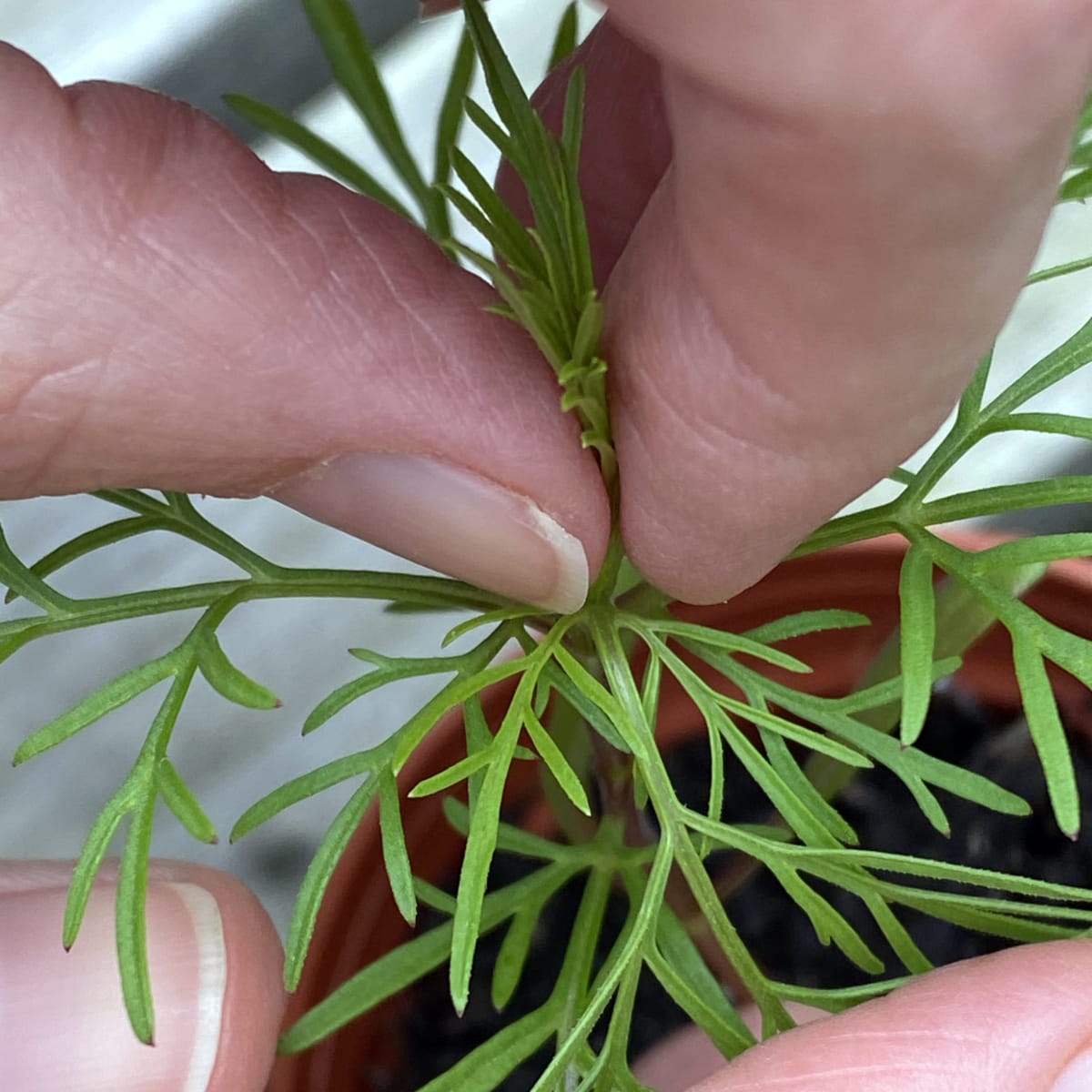
Once your young plants have established 2 to 3 pairs of leaves, it is time to perform a vital bit of maintenance: pinching out. Simply pinch off the very top growing tips with your fingers. This stops the plant from growing into a single tall, weak stalk and forces it to branch out, resulting in a much bushier plant with an abundance of extra flowers.
Pinching out the top leaves to create a bushier plant
3. Maintenance: Keeping Blooms Alive Until Autumn
Taller varieties of Cosmos may necessitate staking for support against strong winds. Beyond that, the absolute golden rule for a continuous display from May to October is regular deadheading.
Don't just pluck the dead flower head off. Take your secateurs and prune the stem all the way back to the first set of leaves located beneath the spent flower head. This signals to the plant to stop wasting energy on producing seeds and instead throw its power into creating a brand-new bud.
Troubleshooting a Lack of Blooms
If you have excessively tall, strong, bushy Cosmos plants that refuse to produce a single flower, you are likely dealing with overly fertile soil or overfeeding with nitrogen-rich fertiliser. Cosmos actually thrive in average, less-spoilt garden soil. Too many nutrients will stimulate massive foliage growth at the expense of flowers.
4. The Perfect Cut Flower for Pollinators
Whether you choose shorter varieties to enhance your container displays or taller varieties for the back of a border, Cosmos excel as cut flowers. Their simple, open form makes it incredibly easy for bees and hoverflies to land and access the nectar, illuminating the garden throughout autumn when other food sources are dying back.
At the end of the season, you can easily collect and save the seeds from any remaining spent blooms to store for the following spring.
Where to Buy Our Tested Cosmos Seeds
If you want to bring these late-season nectar powerhouses into your own garden, we have selected a beautiful mix that we know works.
Shop Our Collection: You can find our custom Cosmos seed mix, packed full of vibrant pinks and whites, directly on our online shop. Click here to purchase our Cosmos Seed Mix.
About the Author & Content Disclaimer
The advice in this post is based on 10+ years of hands-on experience testing seeds in our sandy Suffolk Garden.
While I love sharing my journey and the things I discover, please understand that I am not a certified professional in gardening or wildlife. I ground my content by deep-diving into reliable books and expert resources, but please use my advice only as a guide for your specific garden.
I use and sell the same UK-sourced, wildlife-approved seeds in my own garden that you see throughout this site. Shop our complete seed range here.