
The Ultimate Guide to Wildflower Meadows

TAG: Gardening Advice by Christina

About the Author & Content Disclaimer

The advice in this post is based on 10+ years of hands-on experience testing seeds in our sandy Suffolk Garden.

While I love sharing my journey and the things I discover, please understand that I am not a certified professional in gardening or wildlife.  I ground my content by deep-diving into reliable books and expert resources, but please use my advice only as a guide for your specific garden.

I use and sell the same UK-sourced, wildlife-approved seeds in my own garden that you see throughout this site.  Find my proven seed varieties here.

If you notice any inaccuracies or have additional insights to share, please feel free to contact me via this website's contact forms.

Ready To See More Bees.  Shop Nectar Rich Flower Seeds

The Ultimate Guide to Wildflower Meadows: Sowing, Growing & Maintenance (UK Tested)

1.  Why Wildflowers? The Hidden Power Beneath Your Feet

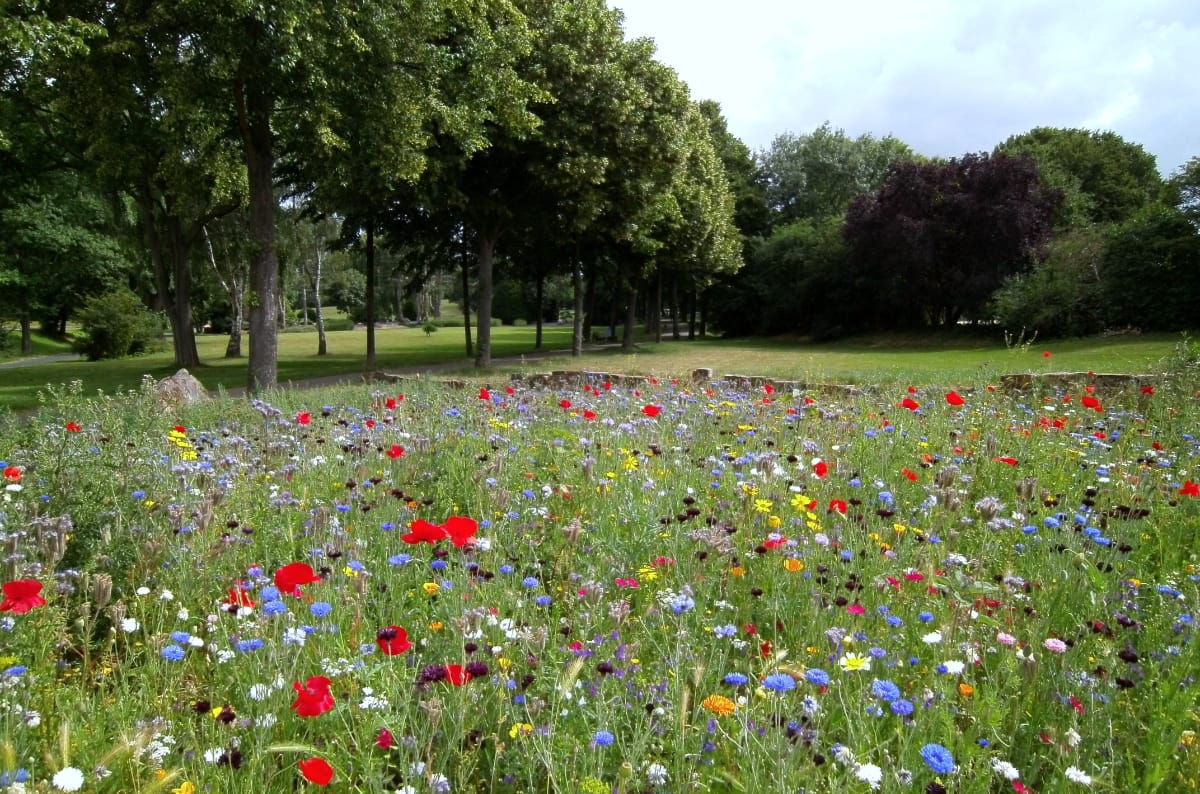
Wildflowers are more than just pretty faces; they are a great addition to any garden, especially in challenging environments like my sandy Suffolk soil.  They are hardy, an absolute haven for pollinators and birds, and play a crucial role in maintaining and enhancing soil health; a resource vital for all life.

The Role of Wildflowers in Soil Health

Beneath the surface, a complex network of roots works tirelessly to improve the soil, helping to mitigate the effects of drought and prevent floods.

  • Improving Soil Structure: Diverse root systems (deep taproots like Devil's Bit Scabious and dense, shallow roots like Oxeye Daisy) create channels in the soil, increasing porosity.  This combats soil compaction and improves water retention, helping plants thrive during dry periods.
  • Preventing Erosion: Wildflowers act as natural anchors, holding the soil in place and preventing topsoil loss from wind and rain.
  • Enhancing Soil Fertility: Certain legumes, like clover and bird's-foot trefoil, have a special relationship with nitrogen-fixing bacteria, enriching the soil.  Deep-rooted wildflowers such as wild carrot and chicory can access nutrients far below the surface, bringing them up and making them accessible to shallower-rooted plants when they die.
  • Sequestering Carbon: Wildflowers absorb carbon dioxide during photosynthesis, and a portion of this carbon is then stored in the soil, helping to mitigate climate change.

2.  Planning & Sowing Your Wildflower Patch

Creating a thriving wildflower patch requires careful planning and maintenance, dispelling the myth of effortless natural abundance.  Success hinges on actively managing the environment.

Key Considerations Before You Begin

  1. Soil Fertility is Key: Unlike most gardening, wildflowers flourish in nutrient-poor, light, and well-drained soils.  Overly fertile soils will favour grass growth.  Removing existing grass, weeds, or even the topsoil can expose less fertile subsoil
  2. Weed Management: Thorough weed removal is paramount before sowing.  Address problematic weeds like docks, thistles, and nettles.  Perennial weeds may require ongoing attention in the first year, while annual weeds typically diminish after the first season.  manual removal or using black plastic sheeting are suitable options.
  3. Maintenance is Essential: A hands-off approach will likely result in the rapid dominance of aggressive grasses and scrub, overshadowing the wildflowers.  Regular maintenance, particularly annual mowing and cuttings removal, is crucial.
  4. Grass Control: Wildflower mixes should include fine, non-aggressive grasses that complement, rather than compete with, the wildflowers.

Optimal Sowing Time: Why Autumn Sowing is Best

While you can sow after the last frost (March to May), Autumn (late August to October) is the best time to sow wildflower seeds in Great Britain for several reasons:

  1. It's Natural: In the wild, native wildflowers drop their seeds in the autumn, and mimicking this natural process helps to ensure the seeds germinate and thrive.
  2. Less Competition: In autumn, annual weeds are dying off and perennial weeds are entering dormancy, meaning there will be less competition for sunlight, water, and nutrients.
  3. The Weather is Ideal: Autumn is a time of mild weather with plenty of rainfall, providing the perfect conditions for wildflower seeds to germinate and grow.
  4. Strong Root Growth: Autumn sowing gives the seedlings time to develop a strong root system before winter, helping them withstand the cold weather and drought in the following spring and summer.
  5. Cold Stratification: Sowing your wildflower seeds in autumn gives them the opportunity to experience the cold weather they need to break dormancy.

Sowing Instructions

  1. Prepare the Seedbed: Remove all existing grass and weeds.  Rake the soil to create a fine, loose texture (fine tilth).
  2. Sow Thinly: Seeds are best broadcast at a rate of 2 grams per square metre, unless directed otherwise on the packaging.
  3. Coverage: Wildflower seeds should never be sown too deeply.  Lightly rake the area again or cover the seeds with a thin (1cm) layer of soil.  Poppies, for example, only need the soil to be disturbed.  Cornfield annuals need to be sown on weed-free soil.
  4. Water: Water thoroughly after sowing and as needed during dry periods.  Keep the soil moist until the seeds have germinated.
  5. Pots and Compost: If sowing in posts, use seed compost as it has the least nutrients.  Ensure pots have drainage holes.  It's a good idea to add some soil from your garden to your compost for the seed to germinate in, this will help them establish once put into your garden.

3.  Choosing Wildflowers by Soil Type

A Key part of successful wildflower gardening is "right plant, right place." Unlike traditional gardening, you must match the wildflower to your existing soil type and conditions.  Generally, soil fertility should be low, and the seed is best sown on well-drained, nutrient-poor subsoil.

Native Traditional Meadow Mix

Wildflowers by Soil Type

Acid Soils

  • Autumn Hawksbit, Birdsfoot Trefoil, Betony, Corn Poppy, Devil Bits Scabious, Lady's Bedstaw, Meadow Buttercup, Musk Mallow, Oxeye Daisy, Red Campion, Ribwort Plantain, Self Heal, White Campion, Wild Carrot, Yarrow, Yellow Rattle.

Calcareous Soil

  • Birdsfoot Trefoil, Common Vetch, Corn Poppy, Dropwort, Kidney Vetch, Meadow Cranesbill, Lady's Bedstraw, Meadow Buttercup, Musk Mallow, Ox-Eye Daisy, Rough Hawkbit, Ribwort Plantain, Salad Burnet, Self Heal, Common Sorrel, Small Scabious, Wild Carrot, Wild Marjoram.

General Purpose

  • Birdsfoot Trefoil, Betony, Cornflower, Corn Poppy, Field Scabious, Lady's Bedstaw, Lesser Knapweed, Meadow Buttercup, Meadow Vetchling, Musk Mallow, Ox-Eye Daisy, Ragged Robin, Red Campion, Ribwort Plantain, Rough Hawkbit, Salad Burnet, Self Heal, Small Scabious, Sorrel, White Campion, Wild Carrot, Yarrow, Yellow Rattle.

Loam Soils

  • Autumn Hawkbit, Betony, Birdsfoot Trefoil, Corn Poppy, Lady's Bedstraw, Lesser Knapweed, Meadow Buttercup, Meadow Vetchling, Musk Mallow, Ox-Eye Daisy, Ragged Robin, Ribwort Plantain, Self Heal, Sorrel, White Campion, Wild Carrot, Yarrow, Yellow Rattle.

Sandy Soils

  • Agrimony, Meadow Cranesbill, Birdsfoot Trefoil, Corn Poppy, Dark Mullein, Kidney Vetch, Lady's Bedstraw, Meadow Buttercup, Musk Mallow, Ox-Eye Daisy, Ribwort Plantain, Self Heal, Sorrel, White Campion, Wild Carrot, Yarrow, Yellow Rattle.

Wet lands

  • Agrimony, Dark Mullein, Gipsy Wort, Hedge Bedstraw, Lesser Knapweed, Meadow Buttercup, Meadow Sweet, Ox-Eye Daisy, Ragged Robin, Red Campion, Ribwort Plantain, Self Heal, Sorrel, Water Avens, Water Betony, Yarrow, Yellow Rattle.

Pond Side

  • Gipsy Wort, G.  Birdsfoot Trefoil, Lesser Knapweed, Meadow Buttercup, Meadow Sweet, Pendulous Sedge, Purple Loosestrife, Ragged Robin, Red Campion, Self Heal, Teasel, Tufted Vetch, Water Avens, Yellow Flag Iris.

Hedgerows

  • Agrimony, Betony, Bluebell Seed, Common Vetch, Dark Mullein, Hedge Bedstraw, Herb Bennet, Lesser Knapweed, Meadow Buttercup, Ox-Eye Daisy, Ragged Robin, Red Campion, Ribwort Plantain, Self Heal, Sorrel, Sweet Cicely, White Campion, Wild Foxglove, Hedge Garlic, Yarrow, Yellow Rattle.

Woodland areas

  • Betony, Bluebell Seed, Common Agrimony, Hedge Bedstraw, Hedge Garlic, Hedge Woundwort, Herb Bennet, Nettle Leaved Bell Flower, Ragged Robin, Red Campion, Self Heal, Square St Johns Wort, Sweet Cicely, Welsh Poppy, Wild Foxglove, Wood Sage.

4.  Ongoing Care and Annual Cutting Practices

Establishing a wildflower meadow is a long-term endeavour; with proper care, it will improve over time.

Managing Growth and Dieback

  • Patience is Key: Some wild flowers will race ahead of others (Oxeye daisy) while others will start later in the summer (Birdsfoot Trefoil and Yarrow).  Some may not bloom until their second year (Foxgloves).
  • Winter Dieback: Some plants, such as Red Campion and clover, die back over winter and new green shoots will reappear as soon as the temperature starts to warm up.  Do not dig up your pots or patches prematurely!
  • End of Seasons: Wild flowers are past their best at the end of summer.  If you don't mind a wild looking garden, don't cut them back and let them naturally cover the ground as they die back which is great for insects and wildlife.

The Annual Cut: Sustainable Cutting Practices

Wildflower areas, unlike lawns, cannot be effectively maintained with standard domestic lawnmowers once they become densely vegetated.  The annual cut is crucial to reduce soil fertility and prevent aggressive gasses from taking over.

  1. Timing: The optimal time for the annual cut is after the majority of the wildflowers have finished flowering and their seed heads have matured (late summer/early autumn).  This allows the plants to complete their reproductive cycle.
  2. Employ the Scythe: Use a scythe (manual or mechanical) to cut through the mature wildflowers and grasses.
  3. Seed Dispersal (Optional): You can leave the cut vegetation in place for a few days to allow the mature seeds to naturally drop and self-sow, ensuring natural regeneration.
  4. Remove cuttings (CRITICAL): Rake and remove all cut vegetation from the area. This is the single most crucial step; it prevents the build-up of decaying matter that would increase soil fertility and favour aggressive grasses.  The removed cuttings can be valuable additions to your compost heap.
  5. Stubble Trim (Optional): Once the bulk is removed, a standard lawnmower can be used to trim the remaining stubble to our preferred height.

Winter Prep

It's a great idea to leave some wildflowers with their seed heads over winter.  This gives shelter to insects and some tiny caterpillars that like to feed on the seeds.  It also offers food for birds like Goldfinches, who adore Cornflower seeds.  Now is the time to plan how you want your wild areas to look next summer, and think about ordering seeds.

5.  Spotlight: British Wildflower Beauties

British wildflowers are easy to grow and provide a valuable food source for bees, butterflies, and other wildlife.  Here are a few to consider for your garden:

  • Oxeye daisies: These cheerful flowers are perfect for sunny spots.  happy on most garden soils in sun.  Just be aware they can spread quickly! (Height x Spread: 89cm x 60cm)
  • Ragged robins: If you have a damp area, ragged robins will love it.  Their pink flowers are a real eye-catcher and they are a valuable nectar source for pollinators.  (Height x Spread: 75cm x 80cm)
  • Viper's Bugloss: A colourful biennial that prefers a sunny, dry position and certainly suits the soil in Suffolk.  The blue flowers are beautiful and fade to a pink colour.  Wait for it to set seed in later summer before cutting down.
  • Common Knapweed: Will do well in a variety of situations, from damp to dry, though dens woodland and wetland conditions are best avoided.  Leave the seed heads on over winter to provide seeds for birds.  (Height x Spread: 70cm x 50cm)
  • Foxgloves: A popular biennial for a shady spot.  Its spikes of tubular purple flowers are extremely attractive to bumblebees.  (Height x Spread: 1.5m x 45cm)

Ready to start your own Wildflower Haven?

Creating and maintaining a wildflower meadow requires initial effort, but the long-term rewards of a vibrant, wildlife-rich environment are well worth the investment.  Remember: Don't be afraid to experiment!

Click here to buy your UK-sourced, autumn-sow-ready wildflower seeds now!

Ready To See More Bees.  Shop Nectar Rich Flower Seeds

Nothing in Basket!