
Nothing in Basket!
How to Grow, Prune, and Propagate Penstemons
A complete guide to these drought-tolerant, bee-loving perennial favourites.
- Plant: May to July
- Flowers: June to November
- Propagation: Cuttings in summer, seeds in spring
- Loved by: Bumblebees, honeybees, and hummingbird hawk-moths
A single Penstemon cutting from my mother's garden was my true introduction to gardening. It was a spectacular coral pink, and to this day, neither of us knows its exact variety name. Although that original plant has long since gone, we both took cuttings over the years, keeping its beautiful lineage alive in both of our gardens.
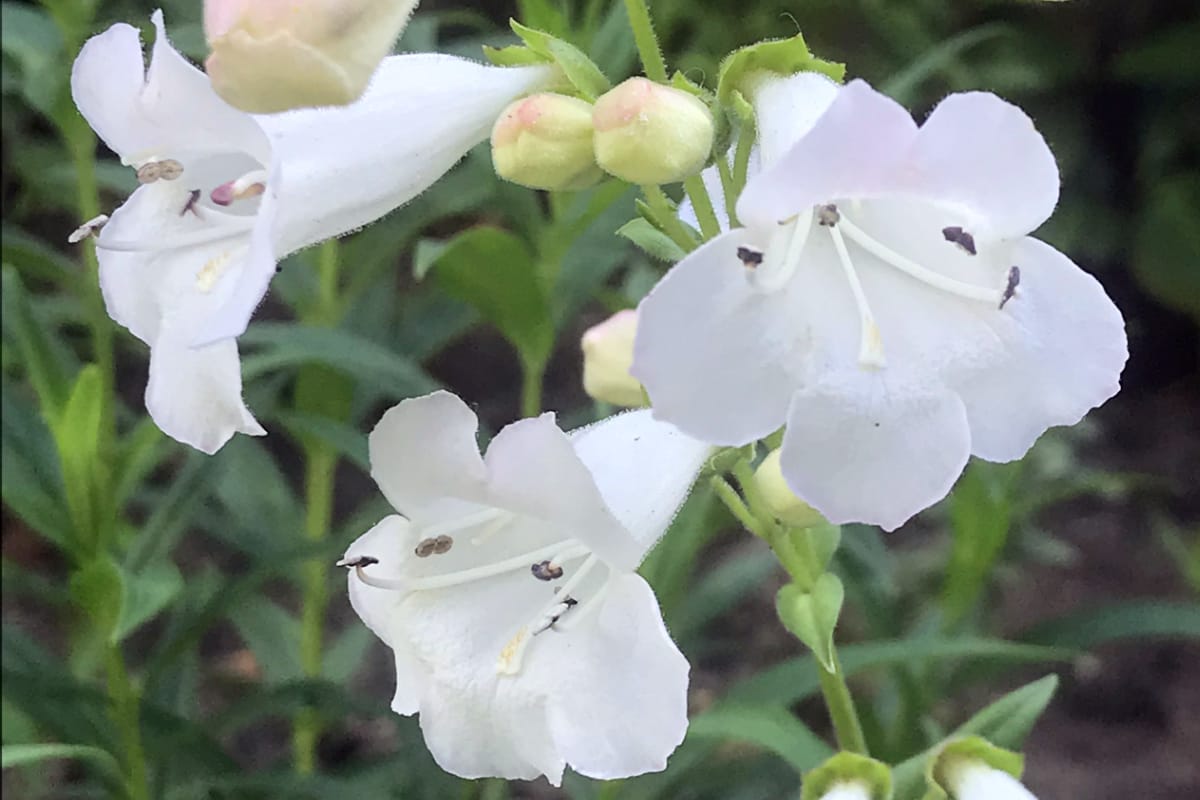
Penstemons are incredibly elegant perennials, producing tall, sweeping spires of tubular flowers that create wonderful movement when the summer wind blows through the borders. They are also exceptionally easy to grow and propagate, making them the perfect companion for a beginner gardener. Blooming relentlessly from June right through to the dark days of November, they provide an invaluable, long-season nectar source for bees and the fascinating hummingbird hawk-moths that frequent our plots.
Choosing the Right Penstemon for Sandy Soil
The textbook environment for a Penstemon is a sunny, sheltered spot with moist but well-drained soil. While they certainly appreciate fertile ground, they cope magnificently with poorer, low-nutrient soils.
In fact, they are spectacular performers in my hot, dry, sandy Suffolk garden. With summer temperatures now hitting historic highs of up to 43°C , I have found that established plants in positions that receive only morning sun thrive entirely without additional watering. If you are gardening on free-draining sand, the varieties that boast the greatest longevity and resilience are:
- 'Andenken an Friedrich Hahn' (Garnet)
- 'Etna'
- 'Laura'
An Expert Rule of Thumb: When choosing varieties, look closely at the foliage. As a general rule, the thinner the leaves, the hardier the variety will be against severe winter frosts.
Colour choice depends entirely on your design scheme. Penstemons stretch from pure whites and pale pinks through to deep purples, striking blues, and rich reds, alongside striking two-tone varieties. You can mass a single shade for a clean, contemporary look, choose subtly complementing tones, or opt for vivid contrasts to make a border pop.
The Shift to Climate-Resilient Prairie Gardening
As our climate patterns shift toward prolonged summer droughts, adapting our plant choices becomes essential. While traditional garden hybrids look stunning in a cottage border, they look equally fantastic woven into a wild, sweeping prairie garden scheme.
Next year, I am introducing the Rocky Mountain Penstemon (Penstemon strictus) into my borders. Native to western North America, this rugged species is completely undaunted by extreme weather, offering total drought tolerance alongside a rare ability to withstand temporary flooding.
Because it is an absolute magnet for native pollinators and thrives beautifully in unamended, sandy ground, I have included high-quality Rocky Mountain Penstemon seeds in our curated seed collection. It allows you to bring that tough, wild prairie resilience straight into your own garden space.
Click here to explore our American Prairie Wildflower Seed Mix
Planting and Establishing Penstemons
When to Plant
The ideal planting window is between May and July. As the soil warms up rapidly during early summer, the roots will settle in with ease, supporting a flush of fresh top growth. Planting early in the season gives the root system plenty of time to anchor deep into the ground before the winter cold arrives.
The No-Dig Planting Method
Traditional advice recommends digging a bucketful of well-rotted manure or organic compost into the entire planting area to a spades depth. However, I have found that if you match the right plant to your natural soil type, you do not need to laboriously amend the ground.
I prefer a simple, low-disturbance method:
1. Because my soil is sandy, it falls back into any hole I dig. So I dig a precise hole just large enough for a couple of root balls.
2. I then nestle a couple of Penstemons together in the same hole (this creates the appearance of a much bigger, bushier single specimen). Giving enough room for the root balls and plants to grow into.
3. Pour water into the hole, then backfill with my sandy soil, firm down gently, and water thoroughly.
Seasonal Care and Watering Routines
Border Watering
Water your new plants thoroughly until they are fully established. An established perennial is one that has been in its position for two to three years and has developed a deep, robust root network.
When you do water during prolonged, hot droughts, aim to apply water heavily at the base of the plant every two weeks rather than watering a little and often. This encourages the roots to push deeper down in search of moisture rather than rising to the baking surface.
Container Display Care
If you choose to cultivate Penstemons in pots, they will dry out significantly faster. Water them thoroughly until moisture flows freely from the drainage holes at the base, and do not water again until the soil feels completely dry 2.5cm below the surface. Placing a saucer beneath the container during high summer will drastically reduce water loss.
No-Dig Mulching
Every spring, I copy the rhythm of nature by laying a generous layer of homemade compost on top of the soil around the base of the plants as a mulch. I never dig it in. By leaving the surface undisturbed, you protect the worms and beneficial soil organisms that are hibernating or working just beneath the surface. (Note: While border plants thrive on mulch alone, container-grown Penstemons will benefit from a general-purpose fertilizer in spring).
Deadheading for Continuous Blooms
As the individual flower spikes fade, the plant will direct its energy into creating seed heads. To keep the display going, deadhead regularly. Cut the spent flowering stems back to a point just above where you can see fresh side shoots emerging; this will rapidly trigger a secondary wave of glossy new blooms.
Pruning and Overwintering Penstemons
Autumn Preparation
To protect your plants from "wind rock", where strong winter gales violently rock the top-heavy plant, loosening the root anchor in loose sandy soil, you should tidy the foliage between September and November. Simply cut the tall stems back by about one-third. Leave the remaining structural growth intact through the winter, as it acts as a natural shield to protect the crown of the plant from severe ground frosts.
Container Frost Defence
If severe winter weather threatens to drop below your specific variety's hardiness rating, wrap bubble wrap securely around your outdoor pots to insulate the root ball, or temporarily move them into a cold frame or unheated greenhouse.
Spring Renovation Pruning
To prevent your Penstemons from becoming leggy, woody, and sparse, they must be pruned back hard every spring. Wait until April or May, once the final risk of harsh spring frost has passed.
Look closely at the base of the old stems for bright new shoots pushing through. Once these appear, safely cut all of the woody stems right down to just above those fresh, ground-level shoots. The plant will rapidly put on growth, reaching its full flowering size in a matter of weeks. Older plants can begin to look tired after five years; when this happens, it is time to replace them using summer cuttings.
Step-by-Step Summer Propagation
Taking semi-ripe cuttings during June, July, and August is an exceptionally reliable way to clone your favourite plants for free, ensuring you always have a fresh supply of your young plants ready to fill unexpected gaps in your borders.
1. Select a clean stem:
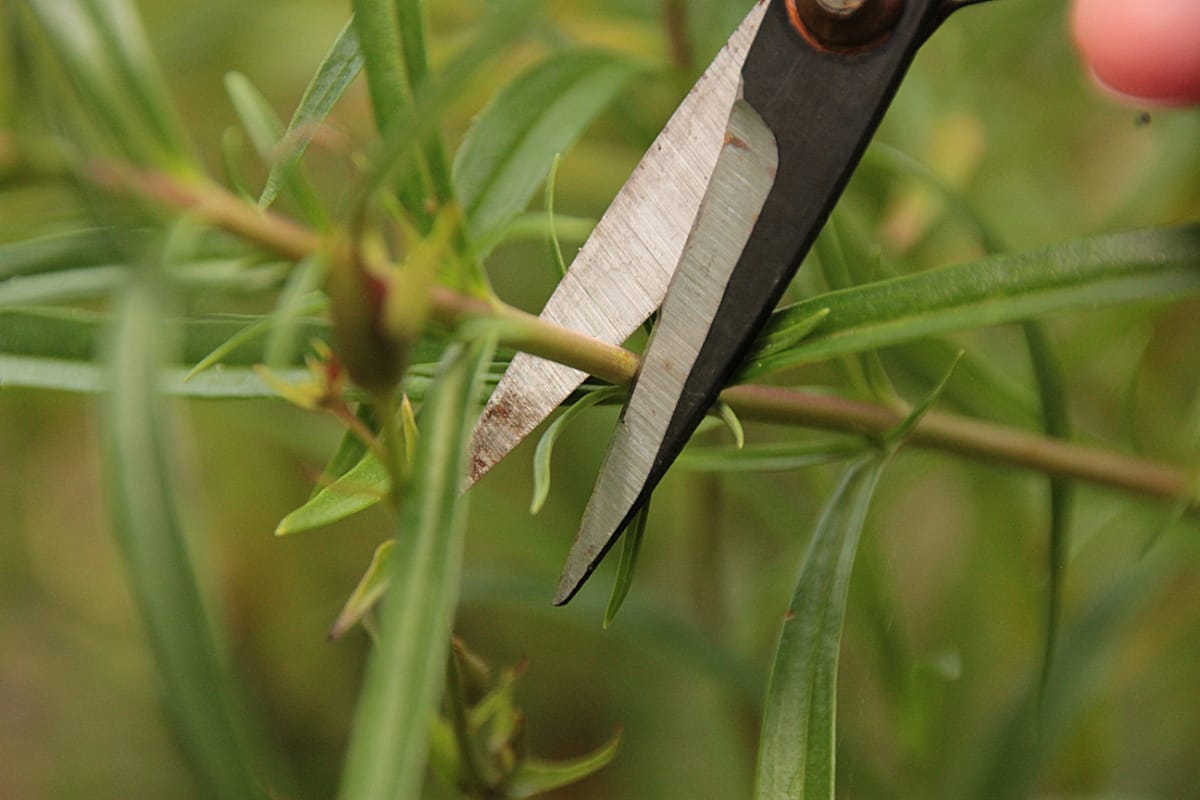
Locate a sturdy, healthy, non-flowering shoot from the middle of the plant. Cut the stem away cleanly.
2. Measure the trim:

Trim the stem cleanly just below a leaf joint (node) so your final cutting is between 5cm and 10cm in length.
3. Strip the base leaves:
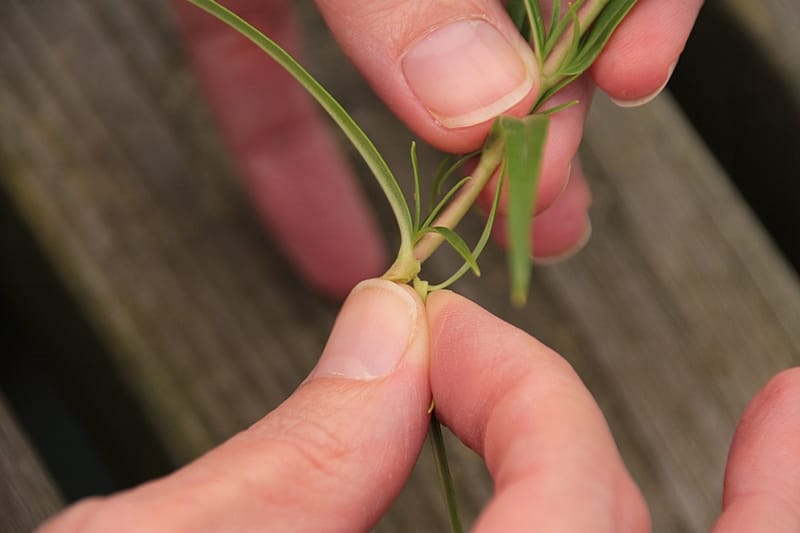
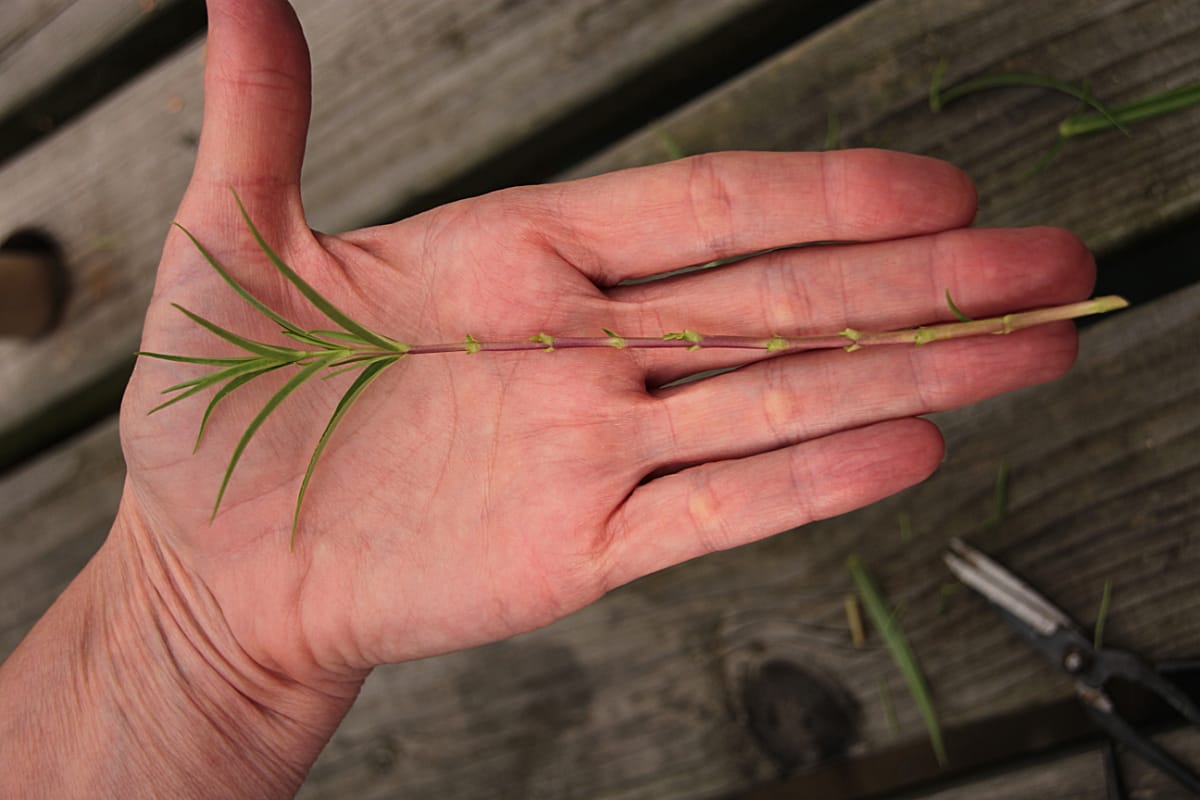
Carefully strip away the leaves from the lower half of the stem. This bare section is where the new root system will emerge.
4. Reduce the top foliage:
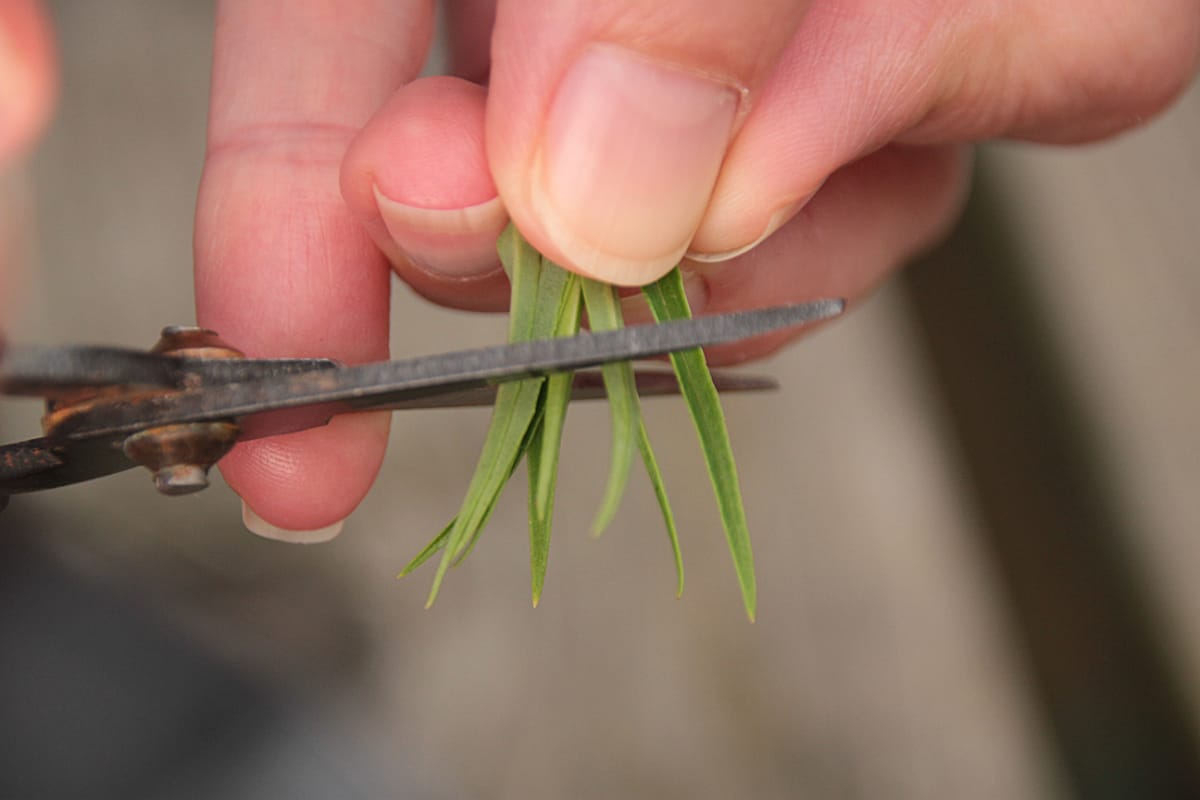
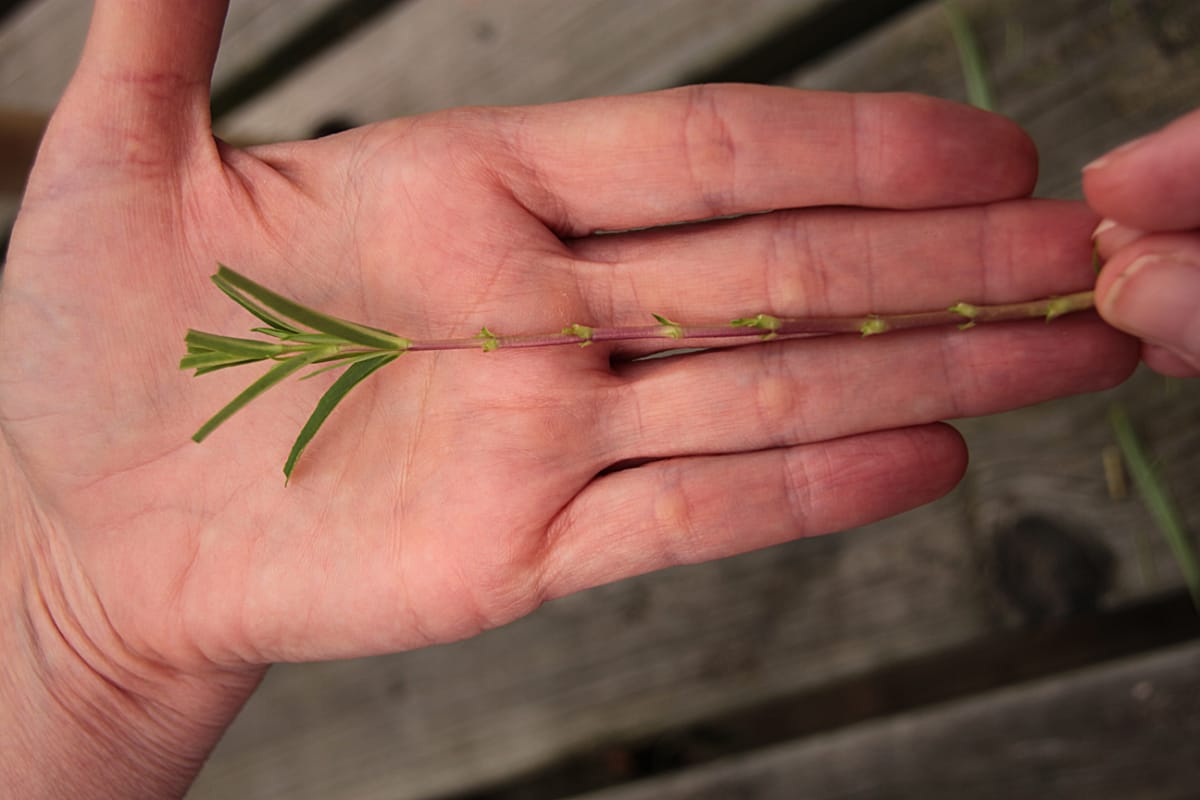
Cut the tips of the remaining upper leaves completely in half using sharp scissors. This simple trick drastically reduces water loss through transpiration while the cutting has no roots.
5. Pot up and protect:
Insert up to five prepared cuttings around the inside edge of a 9cm pot filled with gritty cutting compost. Place the pot in a shallow tray of water situated in a sheltered, shaded spot.
Pro Tip: I place a small wire cage over my cutting trays to stop inquisitive blackbirds from pulling out the loose soil. Keep them protected over winter in a cold frame or against a warm house wall, ready to plant out next spring.
Growing from Seed
You can also leave a few flower heads intact in autumn to harvest the dry seeds. Sow them in spring using a seed tray fitted with a clear propagator cover. Keep them in a warm, bright indoor spot; they require a humid, warm atmosphere to break dormancy. Keep in mind that seed-raised plants will be beautifully unique variants, whereas cuttings offer an exact genetic clone of your original parent plant.
Troubleshooting Common Issues
Penstemons are remarkably trouble-free, which is precisely why they are such a staple of the low-maintenance wildlife garden. However, keep an eye out for two common issues:
- Powdery Mildew: A white, dusty fungal coating that can appear on foliage during humid summers if air circulation is poor. Ensure plants aren't overcrowded.
- Frost Damage: Crisped, black spring foliage caused by late frosts. Simply trim away the damaged tips once the weather warms up permanently.
Always consult the individual care label or cross-reference the RHS hardiness ratings when introducing a new hybrid to your specific regional microclimate.
Bring Resilient Pollinator Beauty into Your Garden
While Penstemon hybrids provide wonderful architectural structure, building a truly self-sustaining, drought-proof wildlife haven starts with native and wild-strain seeds. Discover our carefully balanced mixes designed to thrive on light soils and feed our local pollinators.
Explore our full range of pollinator-approved wildflower seeds here.
About the Author & Content Disclaimer
The advice in this post is based on 10+ years of hands-on experience testing seeds in our sandy Suffolk Garden.
While I love sharing my journey and the things I discover, please understand that I am not a certified professional in gardening or wildlife. I ground my content by deep-diving into reliable books and expert resources, but please use my advice only as a guide for your specific garden.
I use and sell the same UK-sourced, wildlife-approved seeds in my own garden that you see throughout this site. Shop the seeds here.
If you notice any inaccuracies or have additional insights to share, please feel free to contact me via this website's contact forms.