
Nothing in Basket!
All You Need to Know About Growing Erigeron (Fleabane)
The ultimate low-growing, drought-tolerant wonder for cracks, crevices, and sunny borders.
- Plant: Spring or Autumn
- Flowers: May to the first autumn frosts (November)
- Soil: Poor, gravelly, sharply drained sand or paving grit
- Loved by: Solitary bees, hoverflies, and butterflies
Erigerons, commonly known as fleabane, are low-growing, clump-forming perennials that are exceptionally easy to grow and care for. They are perfect for softening hard landscaping, adding a delicate touch of colour to the garden, and attracting a wealth of bees and butterflies.
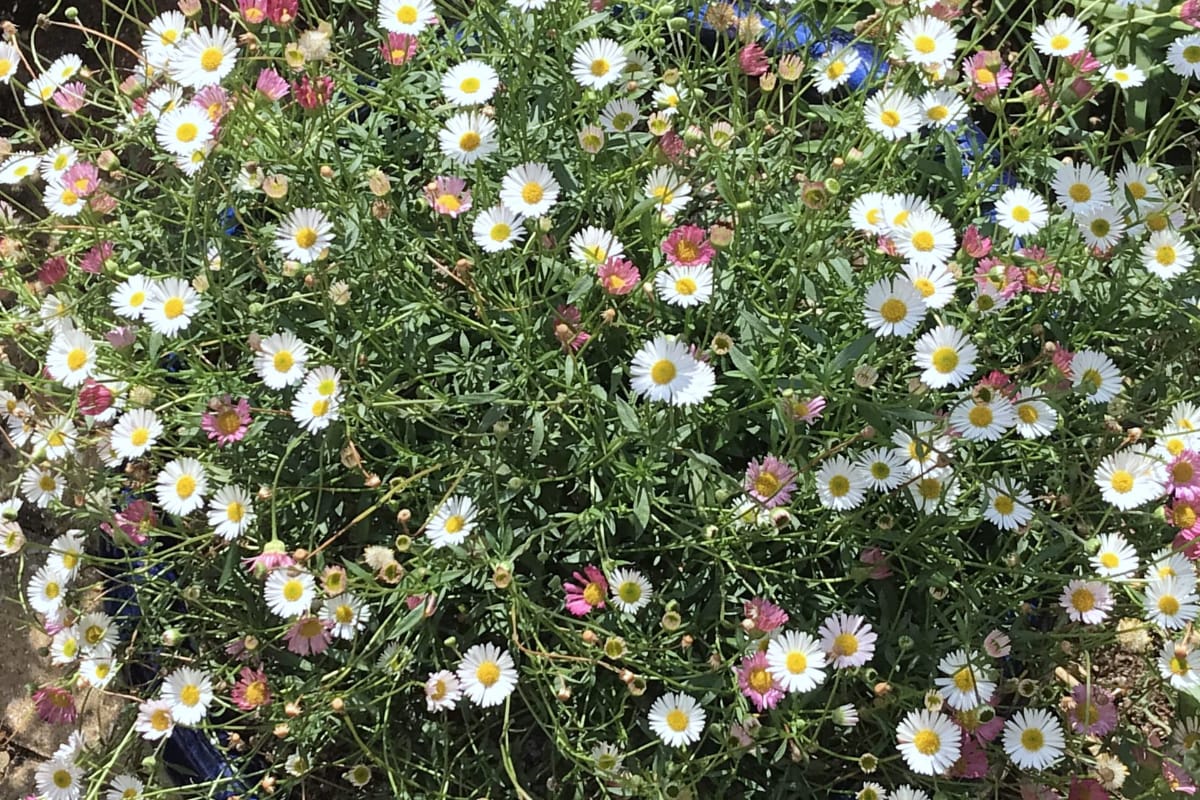
While there are many varieties available, the undisputed star for a dry garden is Erigeron karvinskianus (Mexican Fleabane), and it is the only member of the family that has truly thrived in my garden.
I originally bought this plant from the legendary Beth Chatto's nursery after reading her transformative Dry Garden Book. It bears masses of small, daisy-like flowers over an incredibly long period, blooming non-stop from May until the first hard frosts of autumn. The blossoms emerge a crisp, pure white, then gradually blush to a soft pink and deep wine-red with age, meaning a single plant displays multiple shades all at once.
Where to Plant Erigeron
Erigerons are incredibly versatile. While they prefer full sun to really turn on the flower power, they can also handle partial shade. Their absolute priority is sharp drainage; they are brilliantly drought-tolerant once they settle in.
Because of their sprawling, ground-hugging habit, they look magnificent in:
- Gravel gardens/drives and coastal schemes
- The front of dry borders
- Tumbled stone walls or tucked directly between paving bricks
- Cottage-style patio pots and troughs
How to Plant Erigeron
If your garden sits on heavy soil, you must improve the drainage by digging plenty of horticultural grit into the planting hole before you begin.
To plant, simply dig a hole that is twice as wide as the root ball and place the plant in the centre. Backfill with your soil, firm it down gently, and give it a good drink of water to help it settle.
Minimal Care and Clever Problem Solving
Mexican fleabane is a beautifully low-maintenance plant. There is absolutely no need to spend your summer deadheading them; they manage their rolling bloom cycle entirely on their own. If the stems look a bit straggly or untidy at the very end of the autumn season, you can give them a quick trim back to the base.
Overcoming Wet Winters: A Lesson from the Paving
Erigerons are largely free from pests and diseases. The only real enemy they face is a cold, waterlogged winter.
My very first erigeron died after a particularly wet winter, and a second attempt met the exact same fate because the soil held too much moisture. However, the story didn't end there. Before those mother plants died, they had happily scattered their seeds around the garden.
Wet Border Soil: High risk of winter root rot.
Paving Cracks & Gravel: Flawless winter drainage + thriving, self-seeded plants.
Today, I have beautiful pockets of erigeron growing naturally in between our paving bricks, along the sunny edges of pathways, and tucked into pots. I couldn't be happier with the result. If you want to avoid losing your plants during a damp British winter, the secret is to skip the rich borders entirely; plant them with plenty of grit in the leanest, sharpest-draining spots you can find, or let them find their own home in your stonework.
How to Propagate Erigeron
Because they self-seed so readily and effectively, you will likely find that you never need to manually propagate them at all; they will gift you free plants exactly where the garden needs them most.
However, if you want to explicitly control where they go, they are incredibly easy to raise from seed sown in a cold frame during the spring. Alternatively, you can divide established clumps in early spring just as the new growth starts to push through.
Companion Planting for a Dry Ecosystem
While Erigeron karvinskianus provides the ultimate, long-flowering ground cover for hard surfaces, it pairs beautifully with native, drought-resilient wildflowers. Try growing it alongside sun-loving, low-water seed mixes to turn your gravel paths and sunny corners into a rich, buzzing haven for local pollinators.
Browse our drought-tolerant, pollinator-approved wildflower seeds here.

About the Author & Content Disclaimer
The advice in this post is based on 10+ years of hands-on experience testing seeds in our sandy Suffolk Garden.
While I love sharing my journey and the things I discover, please understand that I am not a certified professional in gardening or wildlife. I ground my content by deep-diving into reliable books and expert resources, but please use my advice only as a guide for your specific garden.
I use and sell the same UK-sourced, wildlife-approved seeds in my own garden that you see throughout this site. Shop the seeds here.
If you notice any inaccuracies or have additional insights to share, please feel free to contact me via this website's contact forms.