
Nothing in Basket!
Sun-Kissed Beauty: Helianthemum 'Henfield Brilliant' for Dry Gardens
A dazzling, drought-tolerant rock rose that thrives in the brightest, harshest spots.
- Plant: Spring or Autumn
- Flowers: Late Spring to High Summer (May to July)
- Soil: Poor, sandy, sharply drained (Alkaline to Neutral)
- Loved by: Bees, butterflies, and hoverflies
Gardening in a dry climate presents unique challenges, but what if there was a plant that thrived in baking heat while adding a brilliant burst of colour and supporting local pollinators?
Enter Helianthemum 'Henfield Brilliant' (commonly known as the rock rose), a spectacular, low-growing evergreen cultivar that is as resilient as it is beautiful.
I purchased my original plant from the legendary Beth Chatto's nursery after reading her influential book about her famous dry garden. It was one of the best decisions I've made for my plot; it has coped magnificently with our sandy, low-nutrient Suffolk soil, serving as a bright beacon for wildlife while surviving our increasingly intense, dry summers.
A Cheerful Beacon for Pollinators
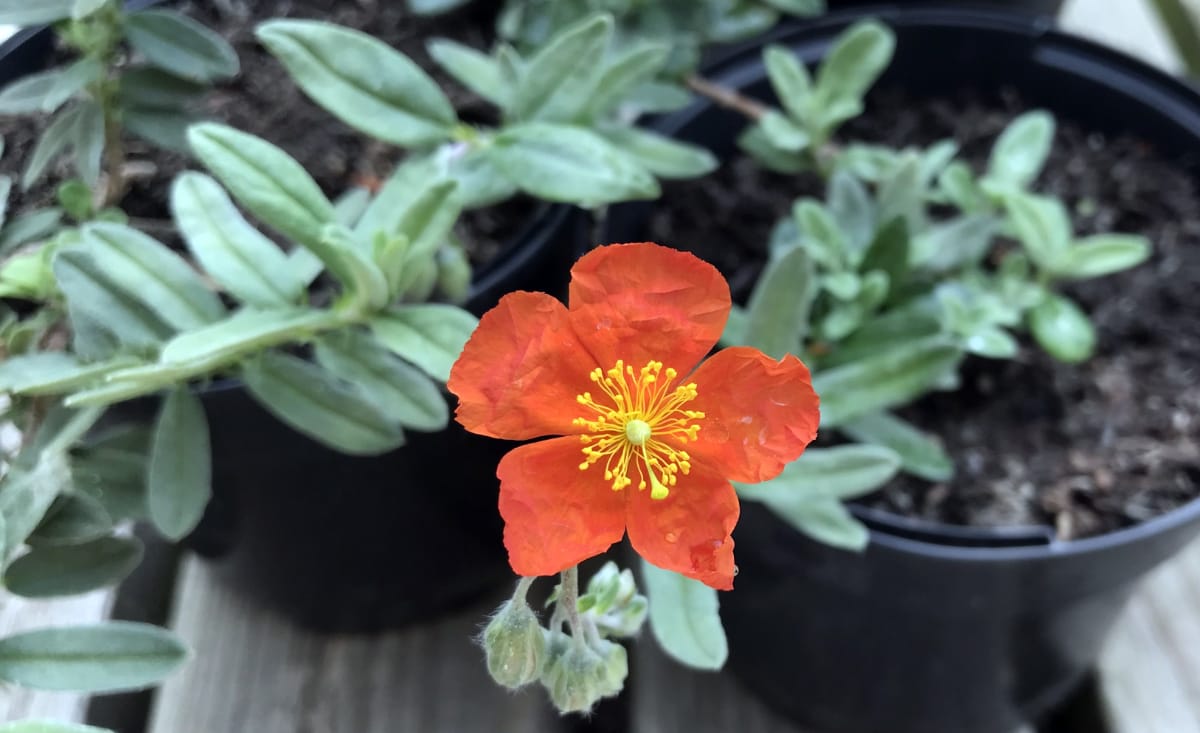
This vigorous, spreading evergreen shrub is an absolute magnet for bees, butterflies, and hoverflies. Its abundant, single, coppery-orange flowers, each spanning about 2cm wide, boast a bright yellow centre packed with pollen.
The blooms open in rapid succession from late spring, creating a continuous feast for pollinators. Not only does this bring vital biodiversity to your garden, but it also paints an intensely vibrant splash of warm colour across dry, dusty borders.
The Golden Rule: Unobstructed Sun
Reaching a compact mature height of 30cm and a spreading width of 50cm, 'Henfield Brilliant' is incredibly versatile. It is perfect for rock gardens, border edgings, sunny gravel pathways, or cascading over hot, dry retaining walls.
However, I've found in my garden it demands full, unobstructed sun.
While many gardening guides suggest it can tolerate partial shade, my hands-on experience in our walled garden proves otherwise. 'Henfield Brilliant' intensely dislikes being shaded or crowded out by neighbouring plants. If a taller perennial grows over it, the foliage will rapidly thin, the stems will stretch and go leggy, and it will lose its compact, healthy shape. Give it the hottest, brightest, most exposed spot in your garden, and it will reward you tenfold.
Baking, Unshaded Sun: Compact, silver-grey foliage + heavy summer blooms.
Shady, Overcrowded Spot: Leggy stems, sparse leaves, and zero flowers.
Minimal Fuss, Maximum Reward
This sun-loving shrub truly lives up to its name. Once its root system is established in the ground, it requires virtually no maintenance. Forget about dragging the hose out during dry spells, this drought-tolerant wonder actively thrives on a degree of neglect. It shrugs off drying winds and intense sun, making it a low-maintenance gem for busy or climate-conscious gardeners.
Planting and Care Tips for Success
- Sunlight: Select a baking, open location that receives maximum, unfiltered sunlight.
- Soil Prep: Plant in poor, well-draining, neutral to alkaline soil. It absolutely hates wet winter feet, so sand or gravelly ground is ideal.
- Watering: Water consistently only until the young plant is established. After that, rely entirely on natural rainfall.
- Fertiliser: Avoid high-nitrogen feeds, as they promote weak, floppy green foliage and dramatically reduce flowering.
- Pruning: Prune the plant back lightly by about a third immediately after its main summer flowering. This keeps the shape tight, prevents it from becoming woody, and frequently coaxes a secondary flush of orange blooms in late summer.
Propagating Your Success
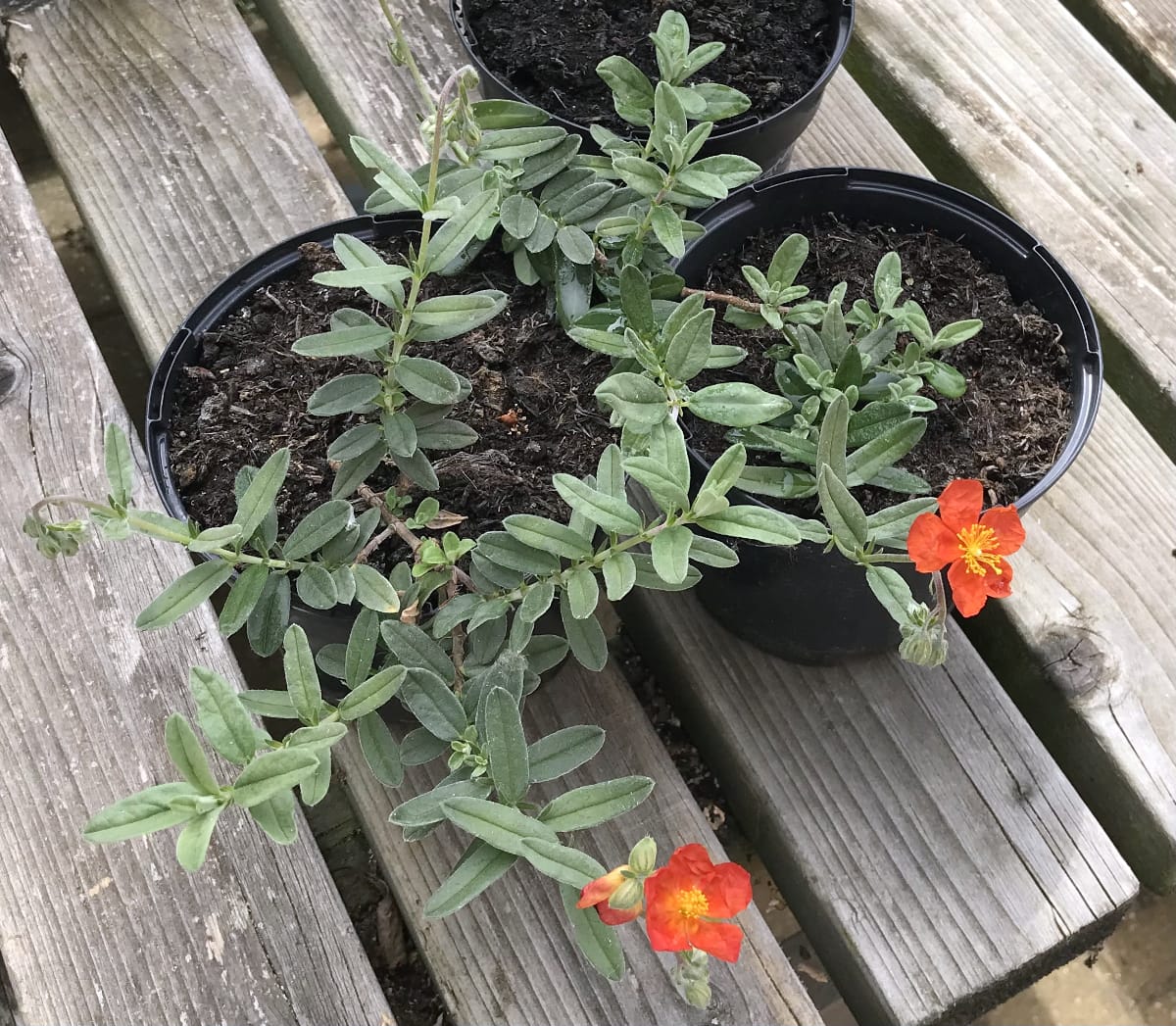
Three cuttings from my garden, it is always rewarding to propagate free plants to spread throughout the dry borders.
Helianthemums are incredibly easy to propagate from semi-ripe cuttings taken in mid-to-late summer. Simply snip non-flowering shoots, strip the lower leaves, and pop them into a gritty cutting compost. Once rooted, they make fantastic, drought-proof ground cover to fill gaps where your grass or thirstier plants have struggled.
Designing a Resilient, Water-Wise Ecosystem
Helianthemum 'Henfield Brilliant' is a member of the diverse Cistaceae (rock rose) family. While these cultivated shrubs provide spectacular structure and evergreen cover, they look their absolute best when paired with wild, drought-tolerant companions.
To create a truly climate-resilient, water-wise garden, try interplanting your rock roses with tough, native dry-meadow wildflowers that can withstand our changing climate without requiring a drop of tap water.
Browse our drought-tolerant, pollinator-approved wildflower seeds here.

About the Author & Content Disclaimer
The advice in this post is based on 10+ years of hands-on experience testing seeds in our sandy Suffolk Garden.
While I love sharing my journey and the things I discover, please understand that I am not a certified professional in gardening or wildlife. I ground my content by deep-diving into reliable books and expert resources, but please use my advice only as a guide for your specific garden.
I use and sell the same UK-sourced, wildlife-approved seeds in my own garden that you see throughout this site. Shop the seeds here.
If you notice any inaccuracies or have additional insights to share, please feel free to contact me via this website's contact forms.